What is raw honey?
Raw honey is honey that has not been heated.
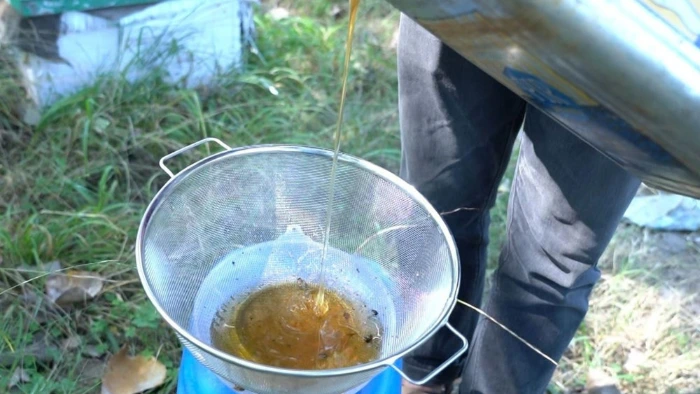
It is only strained to remove big bits like wax. Nothing is added. Nothing is cooked.
A beehive stays at roughly 32 to 35°C, so the common benchmark is simple: heat it beyond that, and it's no longer raw.
Why does it crystallize so fast?
Honey is mostly glucose and fructose. Glucose loves to form crystals.
Raw honey also keeps tiny pollen particles and microscopic crystals. They act like seeds. Since no heat ever melted them, they keep growing.
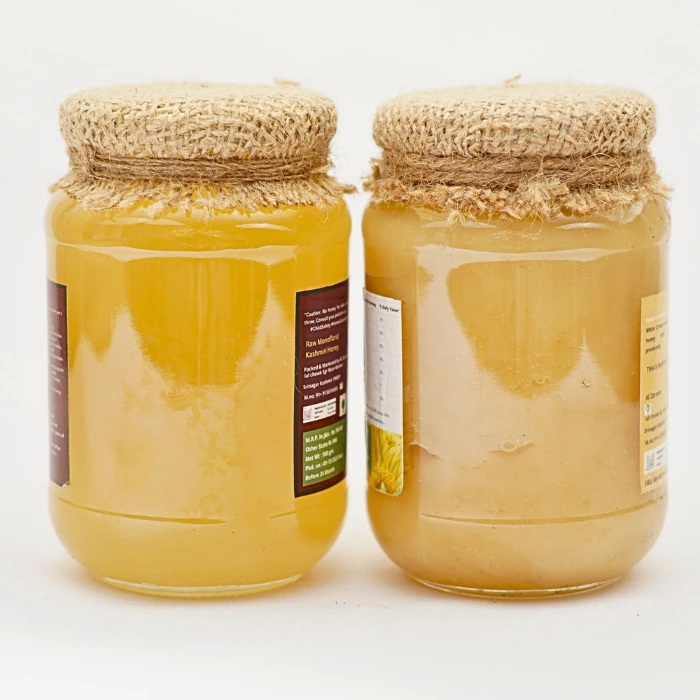
So within weeks, the honey turns thick and creamy. It's natural. It's not spoiled, and it's not sugar added.
And then it looks boring
Let's be honest. Set raw honey is pale, cloudy and doesn't pour.
But we eat with our eyes first. People want honey that flows onto bread and shines in the jar. So the plain jar stays on the shelf.
Raw honey vs filtered honey: why filtered sells
Filtered honey is gently heated and then filtered.
Heat melts the crystal seeds, and filtering removes the particles. So it stays clear and runny much longer. It still crystallizes eventually, just late.
It looks perfect, so people buy it.
The catch for sellers
A seller with a set jar can warm it up to make it look good. But melting crystals needs more than hive temperature. Once honey is warmed past it, it's no longer raw.
I'm not blaming anyone. If customers keep choosing the pretty jar, fewer sellers keep honey raw. That's why real raw honey is hard to find.
One fair note
Crystallization is a clue, not proof. Filtered honey sets too, and some raw honeys, like acacia, stay liquid for a long time. So read the label and ask how the honey was handled.
FAQ
Is crystallized honey spoiled?
No. It's natural and still good to use.
Does it mean sugar was added?
No. Crystals alone don't mean adulteration.
Is filtered honey fake?
No. It's gently heated and filtered. It just shouldn't be called raw..