The Truth About Black Forest Honey (It's Not From Flowers)
Most honey starts with a flower.
Black Forest Honey doesn't.
Where It Actually Comes From
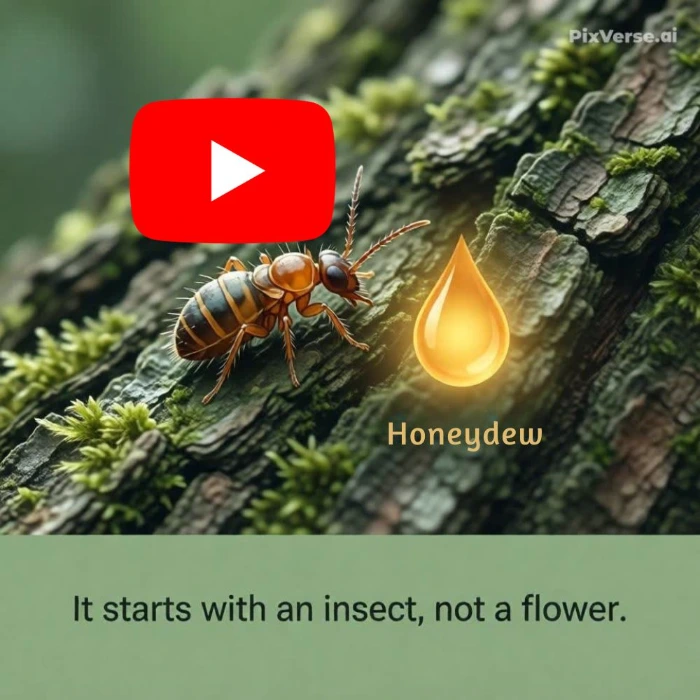
It starts with tiny insects — aphids and scale insects — feeding on tree sap. As they feed, they release a sugary substance called honeydew.
Bees collect this honeydew, not flower nectar, and turn it into honey.
No flowers involved. Just trees, insects, and bees doing what bees do.
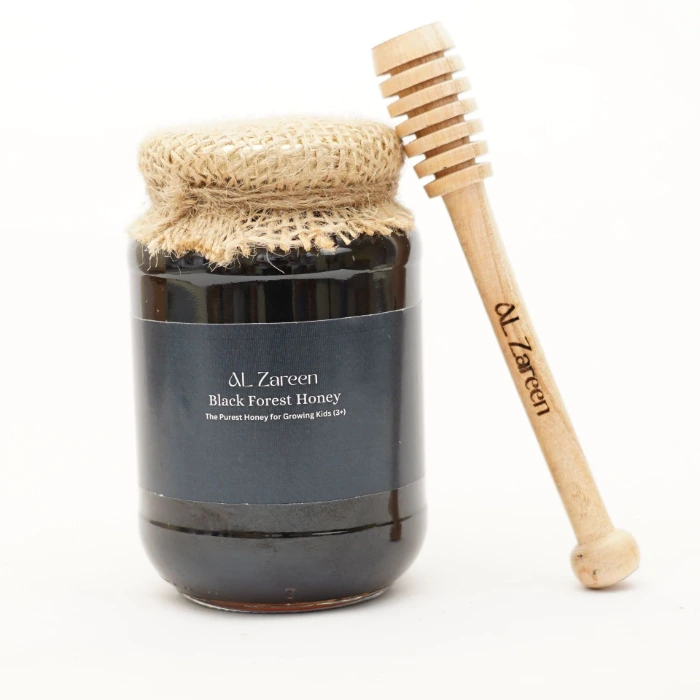
Its Origin: Germany to Kashmir
The name "Black Forest Honey" comes from the Schwarzwald (Black Forest) in southwestern Germany — a region of dense pine and fir forests where beekeepers have collected honeydew honey for generations. It's one of Germany's most well-known honey exports.
India has its own version of this story — and it comes from Kashmir.
In the forests of the Kashmir Valley, similar conditions exist: pine, oak, and silver fir trees host the same kind of sap-feeding insects. Wild bees — often working from cliff-based hives deep in the forest belt — collect this honeydew alongside wild floral nectar, creating a dual-source honey with the same dark, mineral-rich character as the German original, but with its own distinct Himalayan flavor.
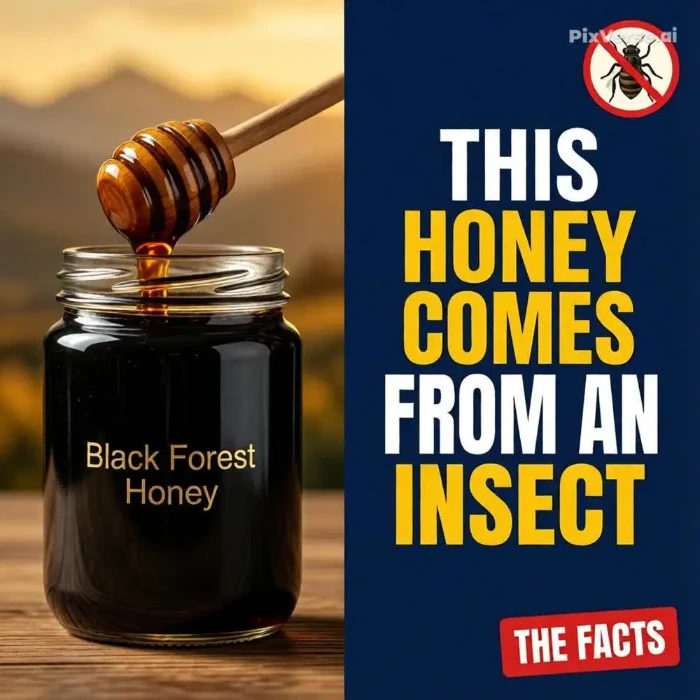
Why It Looks and Tastes Different
Because it comes from tree sap instead of flower nectar, Black Forest Honey is:
- Darker in color — often deep amber to near-black
- Less sweet, more mineral-rich in taste
- Higher in antioxidants and minerals like potassium and magnesium compared to lighter honeys
This isn't a lower-quality honey. It's just a completely different origin story.
Who Should Be Careful With It
Honey — any honey — isn't for everyone.
- Not for infants under 1 year. Risk of infant botulism. This is medically serious, not a minor caution.
- Diabetics should consult a doctor. Honey still raises blood sugar. It's natural, but it's not a free pass.
The Bottom Line
Black Forest Honey is real, well-documented, and genuinely rare — not a marketing trick. It's simply honey with a different beginning: an insect, not a flower.