Raw Honey vs Filtered Honey — What's Actually Better?
If you've stood in front of two honey jars — one says "Raw" and the other says "Filtered" — and felt confused about which one to buy, you're not alone. Most people think "raw" automatically means better, and "filtered" means something has been removed or added. The truth is a bit different, and once you understand it, choosing honey becomes much easier.
What is raw honey?
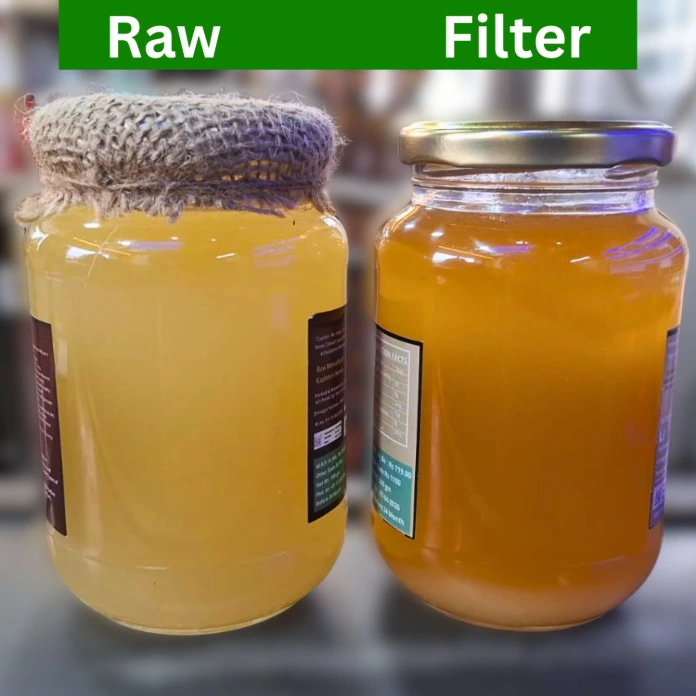
Raw honey is honey exactly as it comes out of the hive. It is not heated above the natural temperature of the hive — around 35°C, which is basically warm room temperature. It is only lightly strained to remove the biggest bits like dead bees or large wax pieces. Because of this, raw honey often looks cloudy, may have tiny specks of pollen or wax floating in it, and crystallises (turns thick and grainy) faster.
What is filtered honey?
Filtered honey goes through one extra step. To make the honey flow easily through a fine mesh and remove smaller bits of wax and pollen, it is gently warmed slightly above hive temperature. This warming is mild — nowhere close to boiling or cooking. Once honey is warmed even slightly for this purpose, it moves from the "raw" category into "mildly filtered." The result is honey that looks cleaner and smoother, but still keeps almost all its natural goodness.
Then why does "filtered honey" sometimes get a bad name?
Because most commercial honey brands don't stop at mild warming. They heat honey to very high temperatures — 70°C or more — to make it look perfectly smooth, prevent crystallisation completely, and increase shelf life. This high heat damages the natural enzymes and reduces the health benefits people look for in honey. This heavily processed honey is often the one people are really talking about when they say "filtered honey is bad."
So which one should you choose?
Both raw and mildly filtered honey are genuinely good choices. If you don't mind small pollen bits and a cloudier look, raw honey is perfect. If you prefer honey that looks clean and pours smoothly while still keeping its natural benefits, mildly filtered honey is the better everyday choice.
The honey to actually avoid is the heavily heated, ultra-processed kind — the type most commonly found in supermarket shelves with long shelf lives and unnaturally smooth texture.
A note for parents
One important thing every parent should know — honey, in any form (raw, filtered, or even cooked into food), should never be given to babies under 12 months old. This isn't specific to raw honey. Honey can naturally contain dormant bacterial spores that an adult's digestive system handles easily, but a baby's immature gut cannot.
Doctors recommend waiting until the baby turns 1 year old. At Al Zareen, we recommend going a little further — waiting until your little one turns 2, just as an extra safety measure. It costs nothing to wait a little longer for something this precious.