Neither is wrong.
Choose filtered honey if you want honey that pours. Choose raw honey if you want honey as close to the hive as possible and you do not mind it setting.
I run a honey brand in Srinagar and I sell both. This guide shows what heat and filtering really change, so you can decide for yourself.
Why most people choose filtered honey
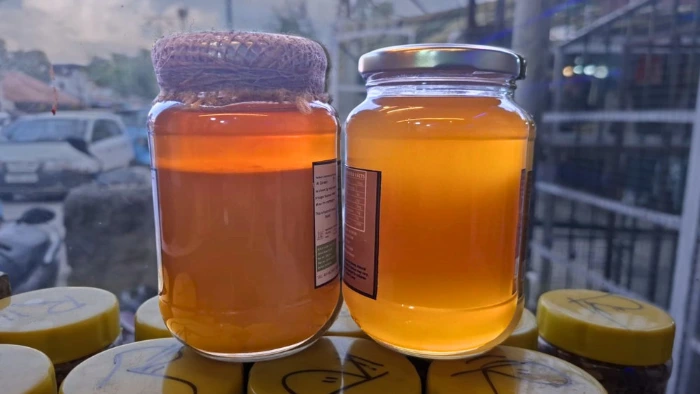
Picture two jars on a shelf. One is clear and golden, and it pours off the spoon. The other is pale, thick and cloudy, and may be set hard.
We eat with our eyes first. So most people pick the jar that pours. That is not a mistake. It is how people shop.
Why raw honey sets so fast
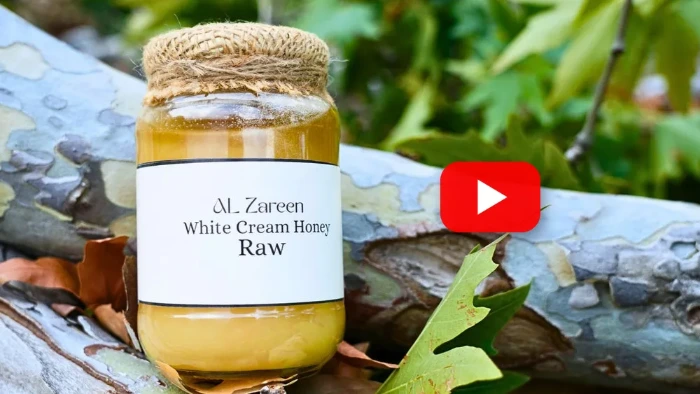
Raw honey is only strained, and never heated. So it keeps its tiny natural crystals and particles, and those act like seeds. Crystals grow around them.
Cold weather speeds this up, and a Kashmir winter is a perfect example. The flower matters too. Honey with more glucose sets faster, while honey with more fructose, like acacia, can stay runny for a long time even when it is raw.
Setting is natural. It is not spoiled, and it does not mean sugar was added.
What heat and filtering change
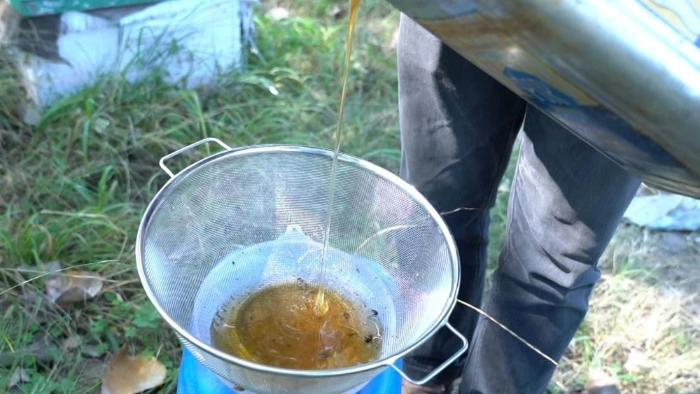
Filtered honey is gently heated and then filtered.
- Heat melts the tiny crystals already in the honey.
- Filtering removes small particles, like bits of pollen, that crystals grow around.
- So the honey stays clear and runny much longer. It still sets in the end, because all honey does.
Gentle heat is not industrial processing
“Filtered” does not mean one thing.
- Gentle filtering: the honey is warmed lightly and filtered, so it pours.
- Heavy industrial processing: large factories often heat honey at higher temperatures and filter it much harder, so it can sit on a shelf for months and look perfect.
Gentle heat changes honey less than heavy industrial processing does. So a lightly heated, gently filtered jar stays closer to raw honey than a factory-processed one.
And where does “raw” end? There is no single legal definition. A beehive stays around 32 to 35°C, and some people allow up to about 45°C. Heat honey past that, and it is no longer called raw.
So, which one should you buy?
- Buy filtered for tea, bread and cooking, when you want honey that pours.
- Buy raw when you want honey as close to the hive as possible and you accept that it sets.
- Either way, choose honey that is labeled honestly.
How to choose in four steps
- Decide how you will use it. Pouring and cooking suit filtered. Spreading suits raw.
- Read the label. Does it say raw or filtered? “Pure” and “natural” alone do not tell you how it was made.
- Look at the jar. Honey that stays clear and runny for many months has usually been heated and filtered. Setting is not a defect.
- Prefer brands that explain their process openly. A dated test report is a bonus.
FAQ
Is filtered honey fake?
No. It is honey that has been gently heated and filtered. It just should not be called raw.
Is filtered honey as good as raw honey?
They are different products. Raw is closer to the hive, and filtered pours and stays clear. Neither one is wrong.
Can I make set honey runny at home?
Yes. Keep the jar in warm water, not boiling, and stir gently. Warmed honey is no longer raw.